







 New Code Sent!

Explore Range Hood Dimensions
Range hoods, also known as vent hoods, are important parts of any kitchen. They help suction moisture, grease smells and heat, which keeps your kitchen smelling fresh. Determining the right fit for your kitchen shouldn’t be hard, as range hood sizes are mostly standardized and based on the size of the cooking surface.
This guide can help you figure out which hood type and size is right for your kitchen and cooking preferences.


Standard range hood dimensions
Range hoods are available in three standard widths:
- 24 inches
- 30 inches
- 36 inches
Depending on the fuel type of your cooktop, vent hoods should be installed 20-30 inches above your cooktop.
Determining the range hood size for your kitchen
Your range hood should be as wide as your stovetop at the very least. You can also install a range hood that is roughly six inches wider than your cooktop. Consider that other factors, like venting strength, should play a role in which hood you select.
How wide should your range hood be?
A range hood should always be at least the exact width of a cooking surface. However, it’s ideal for it to be three inches wider on either side of the cooking surface, as this will capture any additional exhaust during operation.
At what height should a range hood be installed above a stove?
With electric cooktops, it’s recommended that range hoods be installed 20-24 inches above the heat source.
For gas cooktops, it’s recommended to situate a range hood 24-30 inches above the stove.
Regardless of the range’s fuel type, always refer to your product’s manual for specific clearance measurements. You can also read this article to learn how to determine the optimal height of a range hood above your stove to improve your kitchen’s ventilation.
At what depth should a range hood be installed?
A range hood should cover every back and front burner on your cooking station. For most range hoods, 18-22 inches is deep enough to provide full coverage. Remember, downdraft vents are a bit larger and need a minimum depth of 24 inches.
At what distance can you vent a range hood?
Range hood ducts can extend as long as 35 inches, as long as they’re straight. That said, it can extend less if one or two elbows are present. You should never vent with more than two elbows.
Your model’s installation instructions should include a formula to calculate the distance you need. You need to ensure that the duct is long enough to reach outdoors. This will prevent air from returning to your kitchen.
Read this article to learn more about range hoods and venting options.


The different sizes of kitchen hoods
When shopping for a new kitchen hood, consider which style and size will best suit your kitchen’s design and layout.
Keep reading to explore the different types of vent hoods.

Wall-mount canopy hood dimensions
Wall-mounted canopy hoods are typically installed against the wall and over your range or cooktop. This type may require you to remodel your cabinets if your space wasn’t designed with one in mind. Canopy vent hoods usually come in either 30- or 36-inch widths. Canopy range hoods must be at least the same width as the cooking surface. They can also be about six inches larger than your cooktop, with three extra inches on each side.
Shop Whirlpool® Wall-Mount Canopy Hoods

Under-cabinet hood dimensions
You can install these hoods under a cabinet. They are smaller than canopy hoods, but still deliver powerful venting. Under-cabinet hoods are designed to fit snugly between cabinets and are available in similar widths to canopy hoods. These hoods extend past cabinet depths to provide enough coverage for all the burners below. Under-cabinet vent hoods are often 20-60 inches wide, with most standard sizes being 30 or 36 inches.
Shop Whirlpool® Under-Cabinet Hoods

Island canopy hood dimensions
Canopy hoods are also designed to be installed over a kitchen island. They differ from wall-mounted hoods since they’re finished on all sides. Similar to a wall-mount canopy hood, this style should be the same size or up to six inches wider than the cooking surface. Typical canopy hood dimensions are:
30-36 inches wide
24-26 inches deep
Roughly 28 inches high
Shop Whirlpool® Island Canopy Hoods

Over-the-range microwave hood combination dimensions
A microwave hood combination can also vent kitchen air. This combination kitchen appliance, such as Whirlpool brand’s low profile microwave hoods, can be mounted below cabinets, allowing for greater storage space while also letting you cook food.
Over-the-range microwave sizes are determined by your cabinet space. Typically, standard over-the-range microwaves are 30 inches wide, while compact models are 24 inches wide. When the door is closed, the depths are between 15 and 18 inches, but can extend to 42-45 inches when the door is opened. You should allow for a minimum of 17 inches of height prior to installing, or 10 inches for low-profile microwave hoods.
Read this microwave size guide to learn more about microwave dimensions.
Shop Whirlpool® Microwave Hood Combos

Retractable downdraft hood dimensions
Downdraft hoods can be installed right into countertops, and they vent air into the ductwork under the floor. They should sit flush with countertops and rise when needed. Most downdraft hoods match the width of the cooking surface, in addition to being only a few inches deep. When cooking, they will rise roughly 14-18 inches behind the range or cooktop.


Steps to measure for a new vent hood
Before selecting your range hood, ensure that you’re picking one that’s the right size for your kitchen.
Use these steps to measure for your new range hood.

Step 1: Measure your cooking surface’s width
Most residential ranges and cooktops are 30 to 36 inches wide. Some smaller kitchens may use a 24-inch cooking surface. Remember, if you’re measuring to install a downdraft hood, the hood should match your range width exactly and be installed right behind it.

Step 2: Measure the width between cabinets
Measure the width of the space over the range or cooktop. Range hoods often come in widths of 24, 30 or 36 inches, and the hood should be at least as wide as the cooking surface, but preferably 6 inches wider. Under-cabinet hoods and over-the-range microwave hoods are designed to fit snugly between cabinets, while canopy hoods can be installed in one of two ways: flush or with a few inches on either side of the hood.

Step 3: Measure the height of the space above the cooking surface
You need to have enough space between the cooking surface and the bottom of the hood. Always consult local building codes and the manufacturer’s recommended installation heights for your specific appliance.
For reference, here are a few typical clearances needed for different types of range hoods:
20 inches minimum for an electric range or cooktop
24 inches minimum for a gas range or cooktop
No more than 36 inches for both gas and electric cooking surfaces
When installing a hood under a cabinet, don’t worry if it’s not flush with the bottom of your cabinets. It’s more important to retain the correct distance to the cooking surface.
For retractable downdraft hoods, ensure there is enough unobstructed space above the cooking surface, so the vent can extend fully. If you want a microwave hood combination but have limited space above the range, see if the Low Profile Microwave Hood Combination by Whirlpool brand can work for your space. This is a shorter over-the-range microwave, and it can fit in the same space as an under-cabinet hood.

Step 4: Measure the cooking surface’s depth
Measure the cooking surface from front to back, not including the trim or control panel. Vent hoods must be deep enough to deliver adequate coverage for every burner. Commercial and oversized ranges often require specialized or custom range hoods. When installing a downdraft vent, the cabinet below must be at least 24 inches deep. Keep in mind that certain installations may need a countertop depth greater than 25 inches.


Other Considerations
After determining which size range hood makes the most sense for your kitchen, consider these range hood features.
Venting strength (CFM Motor Class)
Cubic feet per minute (CFM) is used to measure venting strength, or airflow capacity. A higher number means a greater capacity to replace kitchen air at a higher frequency.
Typically, if you have a residential range, aim for 200 to 300 CFM Motor Class. Oversized or commercial-style ranges often need more venting capabilities.
To confirm you have the right venting strength, consult the manufacturer’s recommendations for your appliance. You also want to consider your cooking habits, kitchen size and local construction code requirements.
Style
Canopy-style hoods are available in a range of styles and shapes. Often, they are shaped like a capital T or an upside-down funnel. Sometimes, however, they are shaped like a dome. Certain models have glass canopies, LED accents and other stylish elements.
External venting vs. recirculating
Certain range hoods vent externally, meaning they vent outside via ductwork in the wall, floor or ceiling. If you don’t already have ductwork, it must be professionally installed.
Another option is ductless, or recirculating venting. This filters the air before recirculating it back into the kitchen. While these can be installed anywhere, the filter must be cleaned at least twice a year or more often to maintain optimal performance, based on your cooking habits. Convertible hoods are also available and can vent externally or via recirculation.
Most decorative hoods, including these Whirlpool brand canopy and downdraft styles, vent externally. Incidentally, most microwave hood combinations and under-cabinet models are factory set to recirculate. Always confirm with your appliance’s owner’s manual or specifications to learn how your hood vents and if it’s convertible.
It’s also important to look at kitchen hood liners and blowers, as they reside within the ducts of your vent hood to draw out odours and smoke, helping ensure your ventilation system runs as it should. Explore other parts and accessories for range hoods.
Explore Whirlpool® Vent Hoods for your kitchen
Was this article helpful? Pass it on
Get more help finding the right cooking appliances
-
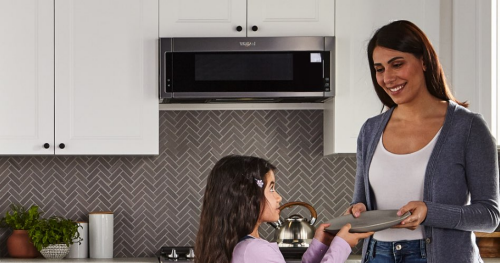 Microwave w/ Vent Vs. Range Hood: Which to Buy? Whether to get a standalone range hood or a microwave with vent comes with a few key considerations.
 -
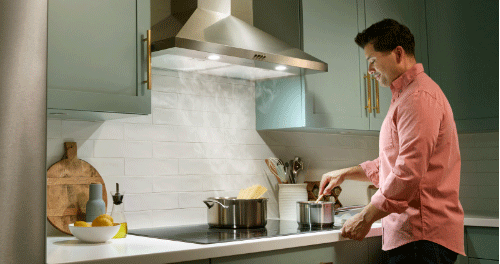 How many range hood cfm is required? Learn how many CFMs are required for your range hood, cooktop or stove with this guide from Whirlpool.
 -
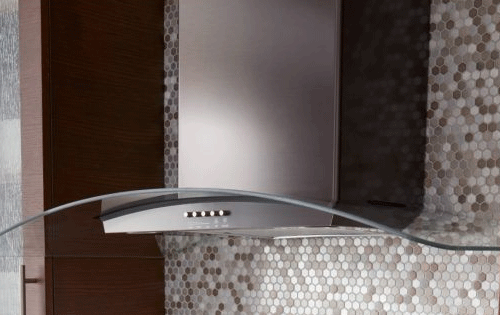 Do I Need Range Hood Venting? Wondering if you need range hood venting? Get answers to your range hood questions and learn what's important when deciding how to ventilate a kitchen.

Appliance IQ
Want more answers to your kitchen and laundry questions?

