







 New Code Sent!

3 Potential Ways to Sanitize Laundry
Germs are often found on everything from towels and bedding to workout clothes, so it’s important to ensure every item is sanitized. This is why you might benefit from a washer and dryer combination equipped with specialty features that can adequately sanitize clothing, so everything gets as clean as possible and comes out smelling fresh.
Use this guide to explore three potential ways to sanitize bedding and attire.

How to sanitize your laundry?
Sanitizing your laundry is typically as easy as washing your clothes on a sanitary cycle or including either a laundry sanitizing product or bleach in your wash. Which option or type of bleach to use must be based on your washer and load type. Always check every care label to avoid fading or harming the fabric.
Tools
- Washer
- Dryer
Supplies
Liquid bleach
- Laundry sanitizer product

Option 1: Use a sanitary cycle
Confirm if your washer has a cycle specifically for sanitizing laundry. Select Whirlpool® washers have the Sanitize cycle with Oxi, which uses extra-hot water to eliminate roughly 99.9% of three common household bacteria.¹ To optimize cleaning performance for a washer without a dedicated sanitary cycle, use the warmest temperature setting available.

Option 2: Use a laundry sanitizer product
If your items can’t be washed in hot water or your washer doesn’t have a sanitary cycle, add a laundry sanitizing product and then use a normal cycle. These products can also be added to a sanitary cycle to increase the bacteria-fighting capabilities. Follow the sanitizer’s directions before adding it to your load.

Option 3: Use liquid bleach
Liquid bleach can be used in two scenarios:
- With a sanitary cycle
- For bleachable items that can’t be washed in hot water.
Follow the manufacturer’s directions about how to include bleach in your load. When using bleach, it’s important to spot test in a hidden area to help avoid fading or damage to the fabric.
Complete the sanitization process in the dryer
Lastly, to sanitize laundry, run it through the dryer. It’s recommended to use a designated sanitize cycle if your dryer has one. If it doesn’t have one, then simply use the warmest temperature setting, as this will optimize cleaning performance.
Select Whirlpool® dryers come with a Sanitize cycle that eliminates 99.9% of common household bacteria¹ while caring for your clothes and bedding.
What to use to sanitize laundry?
If you own a washer without a dedicated sanitize cycle, you can opt for a store-bought product to sanitize your laundry. Don’t forget to ensure that the water temperature is hot enough to kill germs. Next, apply one of the following products or methods, but only after confirming with the item’s care tag that it’s safe to use:
- Phenolic disinfectants
- Bleach
- Hydrogen peroxide
- Hot water and steam

How does the sanitize cycle on laundry appliances work?
Sanitize cycles on laundry appliances help fight certain common household bacteria with an extra-hot wash or dry cycle. Without this cycle, use the warmest temperature setting to optimize cleaning performance.
What temperature is needed to kill bacteria in the washer and dryer?
The maximum heat of water in your washer and air in your dryer varies per model. A temperature of 60 degrees Celsius is typically the minimum temperature required to help disinfect clothing. On average, dryer temperatures typically range between 48 and 71 degrees Celsius.
When to use a sanitize cycle
You should use sanitize cycles when washing items that might contain extra bacteria. These commonly include towels, bedding, or workout clothing. Sanitize cycles can also be a good choice in situations where someone in your family has been sick, as it allows you to isolate their clothing and run it solo through a sanitize cycle.


How to clean a washer and dryer
You should clean your laundry appliances routinely, but especially after laundering bedding, clothes, or stuffed animals that have been exposed to sickness, to help prevent the spread of bacteria. To clean your washer, run it with a tablet specially formulated for the interior, and also wipe down the exterior and vents.
These guides provide more information about cleaning your washer and cleaning your dryer.
Shop Whirlpool® washers and dryers
Laundry day can be hectic. Streamline the process with convenient features like the Load & Go™ Dispenser on select Whirlpool® washers and Advanced Moisture Sensing on select Whirlpool® dryers. Browse the full suite to find the Whirlpool® laundry appliances best suited for your family and household.
Discover more from Whirlpool brand
-
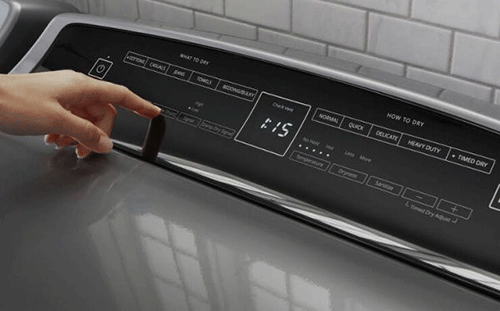 Laundry Symbols: What Do They Mean? What do clothing symbols mean on your washer? Maybe you've seen the detergent symbol washing machine? Learn what they mean.
 -
 How Much Water Does A Washing Machine Use Washing machine water usage depends on the age of your washing machine, as well as the model you have. Generally speaking, new HE washing machines offer greater water efficiency than older machines.
 -
 What Is HE Detergent Why do you need HE detergent for your high-efficiency washing machine? Can you use HE detergent in a regular washer? Learn more about HE detergent.

Appliance IQ
Want more answers to your kitchen and laundry questions?
Was this article helpful? Pass it on
1. Bacteria tested were S. aureus, P. aeruginosa, and K. pneumoniae.

